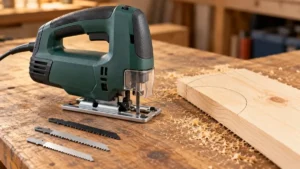
Different projects place different demands on a jigsaw. From shaping hardwood and cutting plywood to trimming countertops and working with metal or plastic, this section looks at the tools, blades, and techniques suited to specific applications. Discover practical considerations for material thickness, cutting precision, blade selection, and the challenges associated with different types of work.
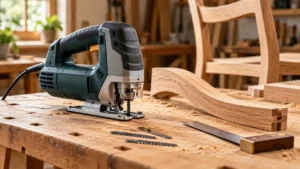
A woodworking jigsaw earns its place in a shop by handling the cuts that resist a table saw or circular saw. Curves, sink openings, interior cutouts, short bevels, and shaped furniture parts all become more manageable with the right tool […]
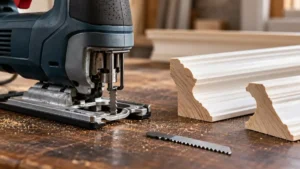
Coping a molding joint asks a jigsaw to follow a shaped line while removing material behind the visible edge. Grip access, predictable speed, and the ability to steer a narrow blade matter more than raw speed. A low barrel grip […]
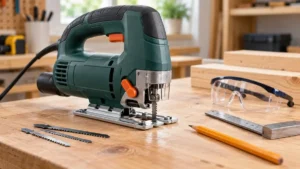
The best beginner jigsaw is one whose controls make sense before the blade touches the board. A stable shoe, a visible pencil line, and a convenient blade clamp make learning easier. Variable speed lets you start deliberately, and a supported […]
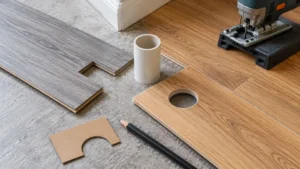
Use a jigsaw for flooring notches, pipe openings and curves after identifying the plank’s exact material and installation requirements. Laminate with a wood-fiber core and vinyl plank with a polymer or mineral-filled core do not automatically use the same blade. […]
A budget jigsaw should cover the cuts you actually make without creating a second shopping list of batteries or specialist parts. Corded tools are often the simplest starting point for occasional curves, shelf notches, and home repairs. A bare cordless […]