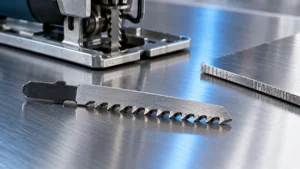
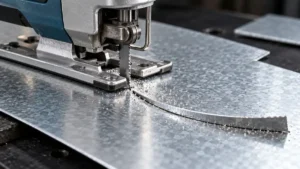
Cutting metal, plastic, acrylic, fiberglass, and other specialty materials requires careful attention to blade design and compatibility. This section examines jigsaw blades made for applications beyond conventional woodworking, including differences in tooth pitch, blade materials, cutting characteristics, and manufacturer-recommended uses. The goal is to help readers identify blades suited to the material and task at hand.
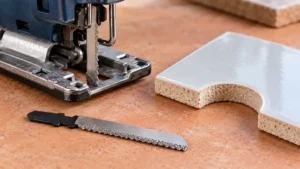
A ceramic tile cut can go from a neat notch to a chipped, dusty mess in seconds, especially when the blade is meant for wood rather than abrasive mineral material. A jigsaw can be useful for outlet openings, curved cuts, […]
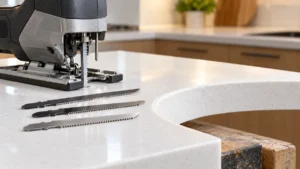
Solid-surface countertops such as Corian contain abrasive mineral-filled material. A blade rated for that surface is a better starting point than an ordinary laminate or wood blade, especially for a sink opening where edge control matters. The Bosch T301CHM3 is […]
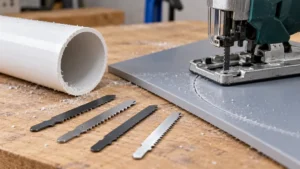
Cutting PVC with a jigsaw can feel deceptively easy. The material is soft enough to cut quickly, yet a poorly matched blade can melt the edge, wander through a pipe wall, or leave a ragged cut that needs extra cleanup. […]
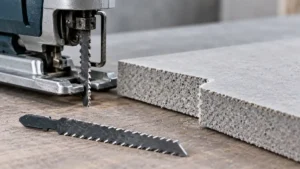
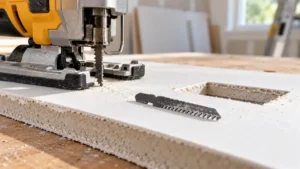
Fiber cement is abrasive and needs a blade explicitly rated for cement or fiber-and-plaster board. Blade fit alone is not enough: a carbon-fiber blade or a ceramic-grit blade can serve a different application even when it uses the same T-shank. […]
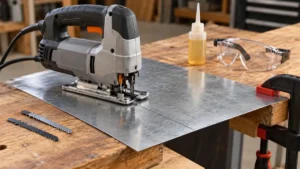
To cut metal with a jigsaw, install a compatible metal-cutting blade, clamp the workpiece securely, select a low or moderate speed recommended for the blade and material, and use straight reciprocating action rather than an aggressive orbital setting. Keep the […]
Drywall and plasterboard create fine abrasive dust, so blade rating and the permitted cutting method matter as much as the saw. A fiber-and-plaster blade gives the teeth a clearer match to gypsum-based board than a general wood assortment. These three […]
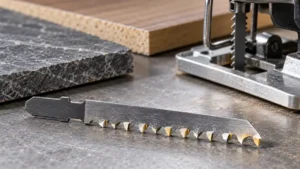
Carbide jigsaw blades are useful for abrasive and difficult materials, from laminate and composite decking to stainless steel and solid-surface countertops. Carbide teeth, carbide tips, and carbide grit behave differently, so the material rating matters as much as the construction. […]
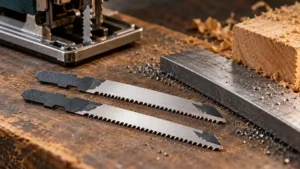
Bi-metal jigsaw blades combine a flexible backing with a hardened cutting edge, but the tooth design still determines the job. A fine metal blade, a wood scrolling blade, and a laminate blade are different tools even when all three use […]
Stainless steel needs a blade explicitly rated for the alloy and thickness. A general high-speed-steel metal blade is not automatically a suitable stainless blade. Carbide and stainless-rated bi-metal designs cover different ranges of sheet and profiles. These eight products include […]
A sheet-metal jigsaw blade needs teeth fine enough to stay engaged in the stock without catching. Material rating and thickness range matter before pack quantity. Thin steel, thicker profiles, and nonferrous sheet can need different tooth designs. These nine metal-cutting […]