Cutting metal, plastic, acrylic, fiberglass, and other specialty materials requires careful attention to blade design and compatibility. This section examines jigsaw blades made for applications beyond conventional woodworking, including differences in tooth pitch, blade materials, cutting characteristics, and manufacturer-recommended uses. The goal is to help readers identify blades suited to the material and task at hand.
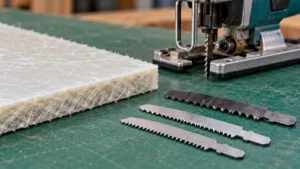
Fiberglass is abrasive, so blade construction and the named material rating matter. Diamond grit, carbide grit, carbide tips, and certain dedicated toothed blades offer different ways to make a supported cut through a fiberglass workpiece. These eight products name fiberglass […]
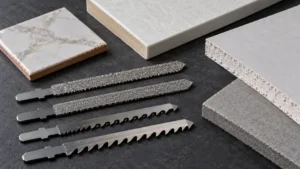
Choose a jigsaw blade for tile, fiberglass, drywall or fiber cement only when the blade’s rating, the saw’s permitted uses and the material manufacturer’s cutting method all agree. These materials do not form one universal “specialty blade” category. A carbide […]
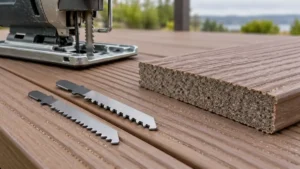
Composite decking combines wood fibers and plastic in a material that can heat and abrade a blade. A carbide-tooth blade rated for composite decking is a more useful starting point than an ordinary wood or metal assortment. These three purchase […]
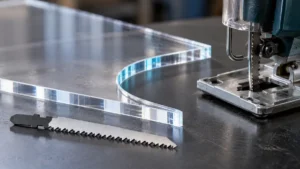
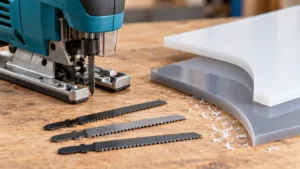
Acrylic can chip, crack, or melt when a blade generates too much heat or catches an unsupported edge. A blade specifically rated for acrylic or Plexiglas gives you a clearer starting point than a broad wood-and-metal assortment. These four acrylic-rated […]
To cut plastic with a jigsaw, identify the plastic, use a blade rated for that material and thickness, clamp it against vibration and test speed and feed on scrap. Melting and cracking are different faults: one often points toward heat […]
Plastic can punish the wrong jigsaw blade in a hurry. A coarse wood blade may grab the sheet, melt the cut edge, or leave a jagged path that looks rough under bright light. Acrylic and Plexiglas bring their own challenge […]
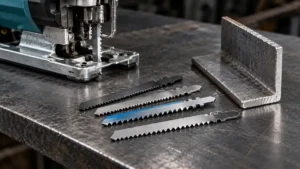
Metal cutting puts very different demands on a jigsaw blade than plywood or softwood. A blade that glides through a cabinet panel can chatter, heat up, or lose its edge quickly against sheet steel, angle iron, tubing, or stainless steel. […]
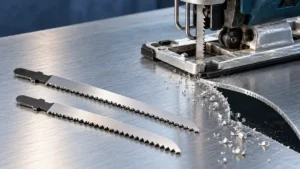
Aluminum can look deceptively easy to cut. It is softer than steel, yet a poorly matched jigsaw blade can load up with chips, chatter across a sheet, or leave an edge rough enough to require substantial cleanup. That is why […]
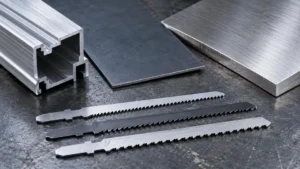
Choose a metal-cutting jigsaw blade by the alloy, stock shape and thickness range listed for the exact blade. Aluminum, thin sheet steel and stainless steel are separate selection problems. Tooth pitch matters, but a universal “use this TPI for metal” […]