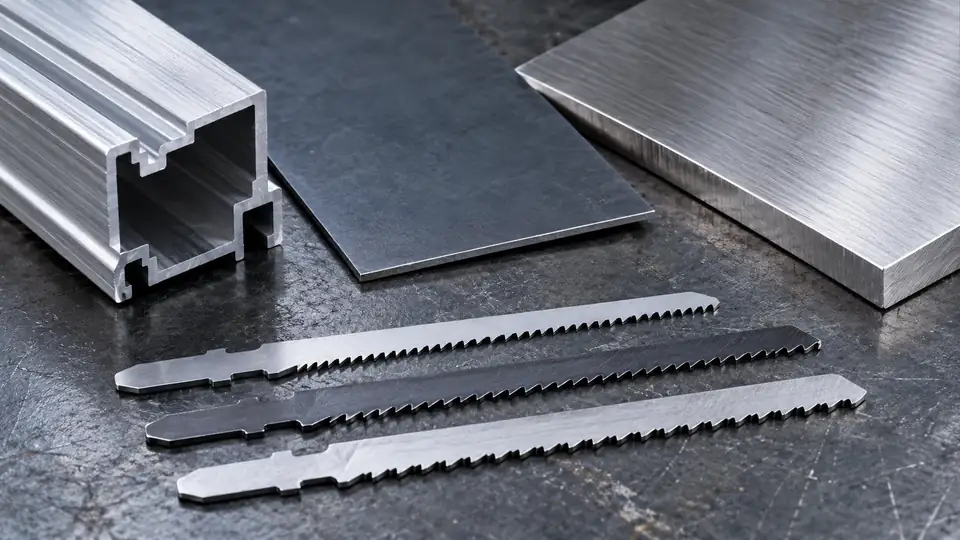
Choose a metal-cutting jigsaw blade by the alloy, stock shape and thickness range listed for the exact blade. Aluminum, thin sheet steel and stainless steel are separate selection problems. Tooth pitch matters, but a universal “use this TPI for metal” rule overlooks the material rating and how the teeth engage the work. Our jigsaw blades for metal guide is the broad entry point. Use the checks below to select the correct material branch before choosing a package.
Identify the Metal and the Section You Will Cut
Find the material specification where possible. A shiny sheet is not necessarily stainless, and an unknown coated panel may need a different handling method from bare stock. Note whether the work is flat sheet, angle, tube or a profile with changing wall thickness. Measure the thickness the teeth will actually encounter. For a tube, that is not simply the outside diameter. For a profile, engagement can change as the blade moves through a corner or wall. Check both the saw’s capacity and the blade’s application range.
| Workpiece | Blade information to confirm | Setup issue to solve |
|---|---|---|
| Aluminum sheet or profile | Explicit non-ferrous or aluminum rating | Chip clearance and secure support |
| Thin mild-steel sheet | Alloy and thin-sheet thickness range | Chatter and inadequate tooth engagement |
| Thicker ordinary steel | Permitted thickness and cutting-edge construction | Feed, heat and tool capacity |
| Stainless sheet | Explicit stainless rating | Heat, edge wear and the exact stock range |
| Tube or angle | Suitable wall thickness and section | Clamping without crushing or blade trapping |
Measure the Wall, Not Just the Outside Size
A tube’s outside diameter describes its envelope, while the blade encounters its walls and the changing engagement between them. An angle or channel also changes the amount of material in contact with the teeth as the cut progresses. Record the section shape alongside its wall thickness and check the blade maker’s intended applications.
For a coated or unidentified panel, establish the underlying metal before selecting the blade. A surface finish can hide the alloy and complicate handling. Do not use appearance, magnetism alone or the success of an unrelated cut as a complete material specification. If the metal cannot be identified well enough to select a rated blade and permitted process, resolve that uncertainty before cutting.
Aluminum: Prioritize the Right Teeth and Chip Space
Aluminum-cutting blades can use geometry intended to move the material’s chips effectively. The right choice depends on thickness and section; the finest teeth are not automatically best. Compare jigsaw blades for aluminum using the manufacturer’s named materials. Keep the work from vibrating, and follow the blade and saw guidance for any cutting lubricant. Do not add a liquid that is incompatible with the tool or work area. If material begins building up on the teeth or the cut becomes labored, stop and inspect the blade after disconnecting power. Pushing harder can turn a selection or chip-clearance problem into a bent blade.
Read Chip Buildup as a Setup Signal
If progress slows and material collects around the teeth, pause the work and inspect after the blade has stopped and the power is disconnected. Check whether the blade is rated for the aluminum and section, whether it is worn and whether support allows vibration. Do not reach into the cutting area to clear a running blade or use more feed pressure as a substitute for inspection.
Any cutting lubricant must be appropriate to the blade, material and tool instructions. A substance suitable for one metalworking process may not be acceptable around the jigsaw or the intended finish. Keep the work area stable and free of loose debris that could interfere with footing or clamping. The objective is consistent chip removal with a controlled cut, not an arbitrary stroke-rate target.
Thin Sheet: Solve Engagement and Vibration Together
A coarse blade can catch a thin edge rather than cutting smoothly. A very fine blade can still perform poorly if the panel vibrates or the application falls outside its rating. Use the stated thickness range as the starting point. Our sheet-metal jigsaw blades comparison is aimed at this distinction. Arrange close support without putting a clamp, fastener or bench surface in the blade’s path. If a supported sandwich method is appropriate, account for the added thickness and every material the blade must cut. Do not hold a small loose metal piece by hand beside the moving blade. Establish workholding before choosing the cutting route, including how the offcut will remain controlled.
Arrange the Workholding Before the Entry
Plan where the blade begins, where the shoe is supported and how the sheet remains secure as the offcut separates. A broad panel can vibrate away from a small clamp even when the starting corner feels solid. Supports should be close enough to control movement while leaving the entire underside blade route clear.
When a suitable backing or sandwich arrangement is permitted, account for all layers in blade selection and reach. Check that fasteners, clamps and sacrificial supports cannot enter the cutting path. A smooth entry does not prove the last part of the sheet will remain stable. Rehearse the unpowered route and solve those support changes before starting the cut.
Stainless: Require the Named Application
A blade marked “metal” may refer to ordinary steel or another specified material. It does not establish a stainless rating. Bosch’s T118AHM, for example, is expressly described for stainless steel sheet; that explicit designation is more useful than guessing from tooth appearance. Compare stainless-steel jigsaw blades against the actual alloy and thickness. A carbide cutting edge is also not a universal permission: different carbide blades are made for different materials. Use the manufacturer’s cutting conditions, including any specified lubrication and operating settings. If the blade stops making satisfactory progress, investigate wear, heat and application fit rather than dwelling in one spot or forcing the tool.
Keep the Blade Rating and Tool Capacity Together
An explicitly stainless-rated blade still has a specified application range. Read that range against the actual sheet or profile rather than assuming all stainless stock is covered. The saw’s own material capacity remains a separate limit, and neither the blade’s hardness nor a high maximum stroke rate removes it.
Inspect a trial edge and the blade’s behavior without assigning an invented expected cutting rate. Increasing resistance, rapid loss of progress or excessive heat calls for a pause and a setup check. Follow the manufacturer’s speed, feed and lubrication guidance for the exact blade. If the permitted combination cannot make satisfactory progress, change the process instead of repeatedly forcing the tool into the same cut.
Finish the Selection with the Operating Plan
Confirm the blade shank, working length and clearance beneath the piece. Check that the shoe can sit stably on the work or an appropriate support arrangement. Plan for sharp edges and chips when handling the finished piece; clean up only after the tool has stopped and power is disconnected where required.
Then follow the metal-cutting procedure for the cutting sequence. A useful final note records alloy, thickness, blade code and settings for the trial. Keep that record with the project so a successful aluminum setup is not mistakenly reused for stainless later.
