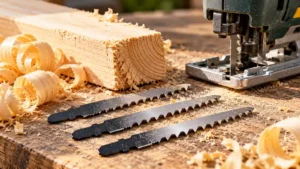
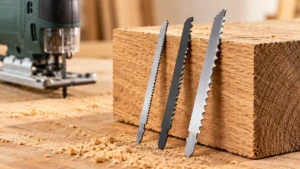
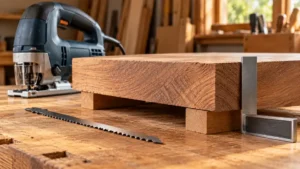
The right jigsaw blade can make a noticeable difference when cutting wood, plywood, MDF, laminate flooring, and other wood-based materials. Here you’ll find information on blade construction, tooth patterns, cutting direction, and material compatibility, along with recommendations for applications ranging from fast rough cuts to detailed work where edge quality matters.
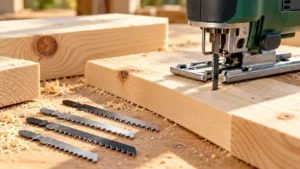
Softwood can look forgiving, yet a jigsaw blade still has to balance cutting speed, control, edge quality, and the thickness of the board. A blade that works nicely on thin pine trim may feel underpowered in a thick construction timber, […]
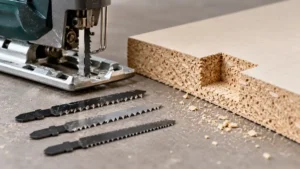
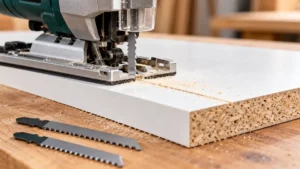
Particleboard needs a wood-rated blade that can cut the compressed chip structure without unnecessarily breaking the edge. Laminated particleboard also has a visible face to protect. A clean-cut profile, supported workpiece, and deliberate feed make a useful starting setup. These […]
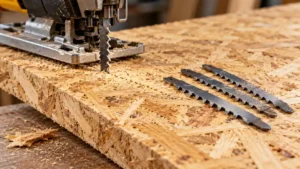
OSB is tough on jigsaw blades. Its layered wood strands and adhesive content can dull a general-purpose blade faster than ordinary softwood, while a coarse blade may leave a ragged edge around a cutout. The right choice depends on whether […]
A jigsaw is well suited to sink and cooktop cutouts in laminate countertops because it can follow straight lines and rounded corners. Use a compatible fine-cut blade intended for laminate or laminated wood products, support the countertop securely, drill starter […]
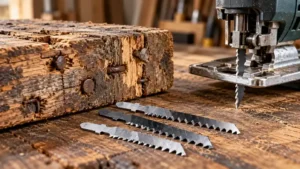
Wood with embedded nails calls for a blade designed to encounter both materials. A wood blade and a separate metal blade in the same case do not make the wood blade nail-resistant. Choose a mixed-material or demolition-rated profile and work […]
Melamine panels can look wonderfully clean on the shelf and surprisingly ragged after a poor jigsaw cut. The decorative surface is hard and brittle, while the particleboard or MDF core underneath can chip, splinter, or tear as the blade exits. […]
A fast cut through framing lumber, plywood, or a thick shelf blank depends on more than pushing the jigsaw harder. The blade has to match the material, the workpiece thickness, and the saw’s shank system. A coarse 6 TPI blade […]
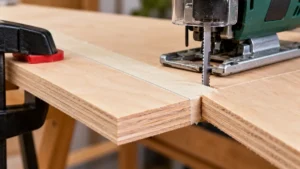
Clean jigsaw cuts in plywood depend on controlling where the blade teeth exit the face veneer. Use a sharp, plywood-suitable blade, orient the finished face according to the blade’s tooth direction, support the sheet close to the cut, and use […]
Thick wood exposes the weaknesses of an ordinary jigsaw blade quickly. A short fine-tooth blade can struggle to clear sawdust, a narrow blade can wander through a deep board, and an aggressive profile can leave a ragged edge that needs […]
A jigsaw’s maximum cutting thickness depends on the exact saw, the material and the blade. Check the saw’s material-specific capacity and the blade’s rated working range, then confirm that the blade clears the underside throughout its stroke. A blade that […]