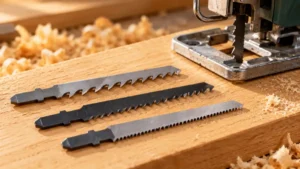
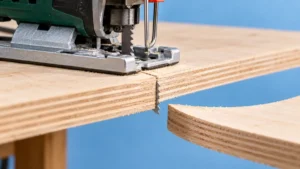
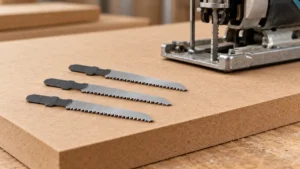
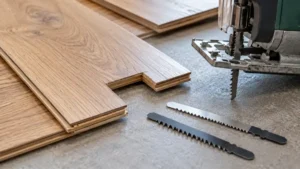
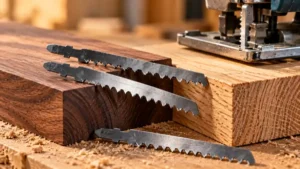
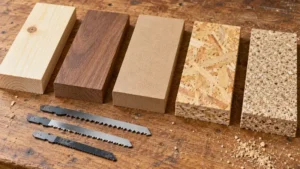
The right jigsaw blade can make a noticeable difference when cutting wood, plywood, MDF, laminate flooring, and other wood-based materials. Here you’ll find information on blade construction, tooth patterns, cutting direction, and material compatibility, along with recommendations for applications ranging from fast rough cuts to detailed work where edge quality matters.
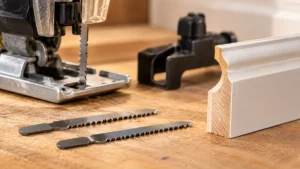
Coping cuts demand more control than a routine straight cut. Whether you are fitting crown molding around an inside corner or shaping a curved plywood component, the blade has to follow a marked line without wandering, tearing the face veneer, […]
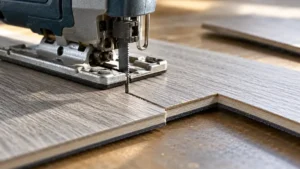
A clean cut through vinyl plank flooring can save an entire row from looking rough around a doorway, vent, or curved wall. A jigsaw is useful for those detail cuts because it can follow templates and handle shapes that a […]
Reduce jigsaw tear-out by matching tooth direction to the visible face, supporting the fibers or coating near the cut and using a sharp blade rated for the material. Keep the shoe stable and test the complete setup on an offcut. […]
A clean jigsaw cut starts with the blade, not the saw alone. A blade that suits a scrolling cut in plywood may behave very differently in laminate, Plexiglas, or a thick hardwood panel. Tooth shape, TPI, blade width, working length, […]
A jigsaw can turn a plywood panel into a smooth curve, a hardwood board into a shaped component, or a laminate sheet into a clean opening, but the blade controls much of that result. The best jigsaw blades for wood […]
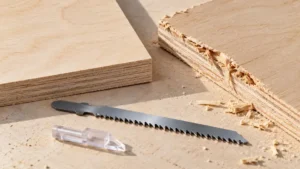
A plywood project can go from clean and crisp to fuzzy and splintered in a few seconds, especially near the exit side of a cut. The right jigsaw blade helps control that problem, but plywood varies widely. Thin cabinet panels, […]
MDF can look deceptively easy to cut. Its dense, uniform core has none of the natural grain changes found in solid wood, yet a jigsaw can still leave fuzzy edges, chipped faces, or a rough curve if the blade is […]
Laminate flooring can look deceptively easy to cut. The boards are relatively thin, yet their dense wear layer can dull an ordinary wood blade quickly, chip along the finished surface, or leave a ragged edge around outlets, door jambs, and […]
Hardwood puts unusual demands on a jigsaw blade. Dense fibers can expose a weak tooth pattern quickly, while a blade that cuts aggressively may leave a rough edge or splintered veneer. The right choice depends on the cut you are […]
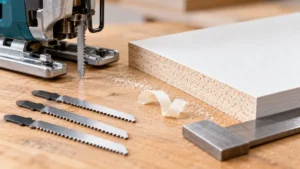
Choose a jigsaw blade for the board’s substrate, surface and thickness, then match the tooth shape to the cut. Solid softwood, hardwood, MDF, OSB and coated particleboard should not be treated as one interchangeable material. A clean visible edge may […]