Explore the accessories and practical techniques that can help you get more from a jigsaw. This section covers cutting guides, splinter guards, blade changes, straight and curved cuts, bevel adjustments, and common cutting problems. Whether you’re learning the basics or working through a particular challenge, you’ll find explanations focused on tool setup, compatibility, and practical cutting considerations.
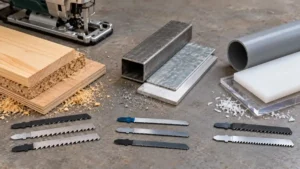
Choose a jigsaw blade by checking five factors: the shank must fit the blade clamp, the blade must be made for the workpiece material, its tooth pattern must suit the desired cut quality, its width and stiffness must match the […]
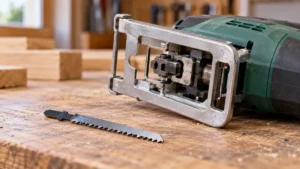
To change a jigsaw blade, disconnect the tool from its power source, allow the blade to cool, open the blade clamp, remove the old blade, and install a compatible replacement. Lock the clamp, then pull gently on the blade to […]
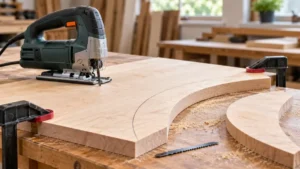
To cut curves with a jigsaw, use a narrow blade suited to the material, secure the workpiece, and guide the saw with slow, gradual turns while keeping the baseplate flat. Match the curve to the blade’s turning capability. If the […]
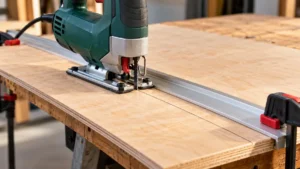
To cut straight with a jigsaw, use a sharp, rigid blade suited to the material, clamp the workpiece securely, and guide the saw against a straightedge or compatible parallel guide. Keep the baseplate flat, apply steady forward pressure, and let […]
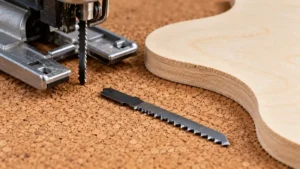
A jigsaw can turn a plywood template into a smooth arc, but the blade decides whether that arc feels controlled or becomes a jagged wrestling match. Curved cuts call for a different approach from long straight cuts. A narrow scrolling […]
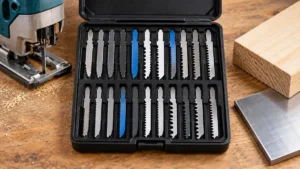
A jigsaw blade set earns its place in a workshop when it gives you the right tooth pattern for the material in front of you. A rough-cut blade can move quickly through framing lumber, while a fine-tooth or reverse-tooth blade […]
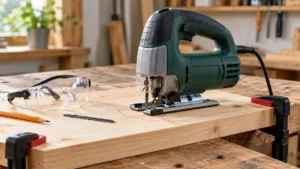
To use a jigsaw, install a compatible blade for the material, clamp and support the workpiece, set the appropriate speed and orbital action, place the baseplate firmly on the surface, and guide the running saw along the marked line without […]