Evan Mitchell is a contributor to Jigsaw Gear, where he covers jigsaws, blades, accessories, and woodworking techniques. His writing explores the differences between corded and cordless models, blade compatibility, cutting performance, and the features that matter when selecting tools for different projects.
Through straightforward comparisons and practical guides, Evan aims to make technical information easier to understand, whether readers are choosing their first jigsaw or exploring accessories for more demanding cuts.
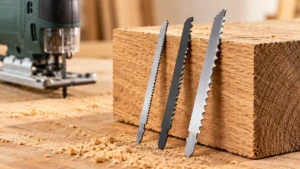
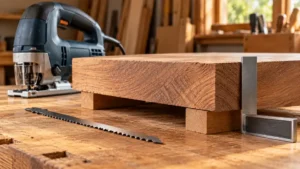
Thick wood exposes the weaknesses of an ordinary jigsaw blade quickly. A short fine-tooth blade can struggle to clear sawdust, a narrow blade can wander through a deep board, and an aggressive profile can leave a ragged edge that needs […]
A jigsaw’s maximum cutting thickness depends on the exact saw, the material and the blade. Check the saw’s material-specific capacity and the blade’s rated working range, then confirm that the blade clears the underside throughout its stroke. A blade that […]
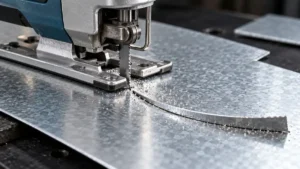
Stainless steel needs a blade explicitly rated for the alloy and thickness. A general high-speed-steel metal blade is not automatically a suitable stainless blade. Carbide and stainless-rated bi-metal designs cover different ranges of sheet and profiles. These eight products include […]
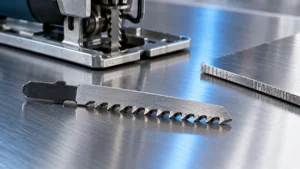
A sheet-metal jigsaw blade needs teeth fine enough to stay engaged in the stock without catching. Material rating and thickness range matter before pack quantity. Thin steel, thicker profiles, and nonferrous sheet can need different tooth designs. These nine metal-cutting […]
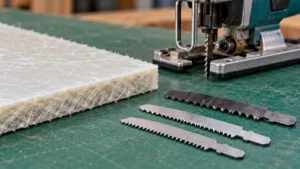
Fiberglass is abrasive, so blade construction and the named material rating matter. Diamond grit, carbide grit, carbide tips, and certain dedicated toothed blades offer different ways to make a supported cut through a fiberglass workpiece. These eight products name fiberglass […]
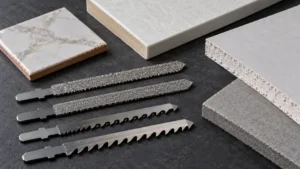
Choose a jigsaw blade for tile, fiberglass, drywall or fiber cement only when the blade’s rating, the saw’s permitted uses and the material manufacturer’s cutting method all agree. These materials do not form one universal “specialty blade” category. A carbide […]
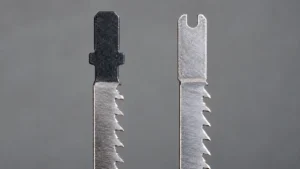
T-Shank and U-Shank jigsaw blades use different interfaces for attaching the blade to the saw. A T-Shank has lateral tabs near the top that engage with a compatible blade clamp. A U-Shank has a U-shaped cutout at its upper end […]
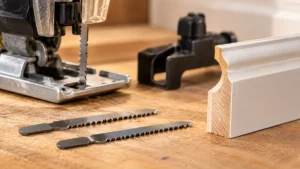
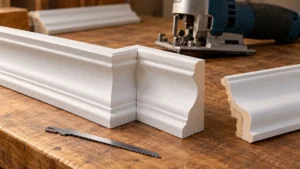
Coping cuts demand more control than a routine straight cut. Whether you are fitting crown molding around an inside corner or shaping a curved plywood component, the blade has to follow a marked line without wandering, tearing the face veneer, […]
Coping molding with a jigsaw means following the profile of one piece while removing material behind the visible edge so it fits against the face of the adjoining piece. The clean front arris makes the joint; the back relief provides […]
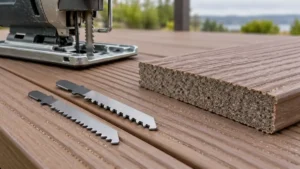
Composite decking combines wood fibers and plastic in a material that can heat and abrade a blade. A carbide-tooth blade rated for composite decking is a more useful starting point than an ordinary wood or metal assortment. These three purchase […]