Evan Mitchell is a contributor to Jigsaw Gear, where he covers jigsaws, blades, accessories, and woodworking techniques. His writing explores the differences between corded and cordless models, blade compatibility, cutting performance, and the features that matter when selecting tools for different projects.
Through straightforward comparisons and practical guides, Evan aims to make technical information easier to understand, whether readers are choosing their first jigsaw or exploring accessories for more demanding cuts.
Makita jigsaws span corded workshop models and cordless LXT tools in both top-handle and barrel-grip formats. The useful differences are grip position, speed control, blade changes, and the battery equipment you already own. These nine genuine Makita saws include LXT […]
A jigsaw blade usually bends because it is being pushed forward or sideways faster than it can cut. Other common causes include a blade that is too narrow or flexible for the job, a tight turning radius, thick material, dull […]
A jigsaw with dust collection needs a path from the cutting area to an extractor, not just a blower that moves dust across the bench. The useful comparison is the saw together with its compatible hood, nozzle, and hose arrangement. […]
A jigsaw dust-extraction setup needs three compatible connections: the saw’s collection fitting, the hose interface and an extractor suitable for the material. A blower only moves debris away from the cutting line; it does not collect it. Before buying adapters, […]
A jigsaw under $100 can handle a surprising amount of home repair, trim work, shelving, craft construction, and basic woodworking. The catch is that low price alone does not tell you whether a tool will suit the job. A corded […]
Thick wood exposes a jigsaw blade’s tendency to flex. A saw can follow the line on the top face while the blade wanders underneath, leaving an angled edge. A stiff blade of suitable working length, firm shoe contact, and a […]
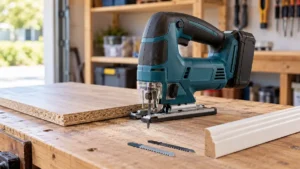
A home jigsaw handles the curves and notches that are awkward with a circular saw: shelf corners, cabinet openings, shaped plywood, and small repairs. The most useful model is one that you can set up quickly and control comfortably. Variable […]
Cutting metal with a jigsaw starts with controlled speed and a blade chosen for the exact material and thickness. Thin sheet needs enough teeth engaged to resist snagging, while profiles and thicker sections need suitable reach and support. The saw […]
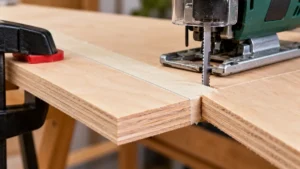
Clean jigsaw cuts in plywood depend on controlling where the blade teeth exit the face veneer. Use a sharp, plywood-suitable blade, orient the finished face according to the blade’s tooth direction, support the sheet close to the cut, and use […]
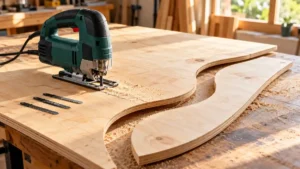
A curved cut can look simple on a pencil line and turn stubborn the moment the blade enters the wood. The jigsaw has to follow the arc without wandering, while the operator manages speed, blade choice, orbital action, and pressure. […]