Evan Mitchell is a contributor to Jigsaw Gear, where he covers jigsaws, blades, accessories, and woodworking techniques. His writing explores the differences between corded and cordless models, blade compatibility, cutting performance, and the features that matter when selecting tools for different projects.
Through straightforward comparisons and practical guides, Evan aims to make technical information easier to understand, whether readers are choosing their first jigsaw or exploring accessories for more demanding cuts.
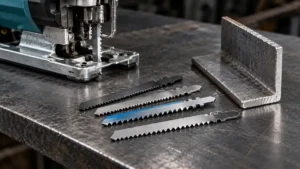
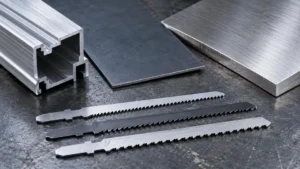
Metal cutting puts very different demands on a jigsaw blade than plywood or softwood. A blade that glides through a cabinet panel can chatter, heat up, or lose its edge quickly against sheet steel, angle iron, tubing, or stainless steel. […]
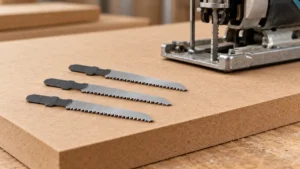
MDF can look deceptively easy to cut. Its dense, uniform core has none of the natural grain changes found in solid wood, yet a jigsaw can still leave fuzzy edges, chipped faces, or a rough curve if the blade is […]
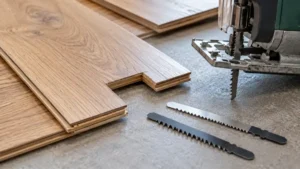
Laminate flooring can look deceptively easy to cut. The boards are relatively thin, yet their dense wear layer can dull an ordinary wood blade quickly, chip along the finished surface, or leave a ragged edge around outlets, door jambs, and […]
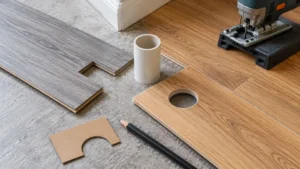
Use a jigsaw for flooring notches, pipe openings and curves after identifying the plank’s exact material and installation requirements. Laminate with a wood-fiber core and vinyl plank with a polymer or mineral-filled core do not automatically use the same blade. […]
Hardwood puts unusual demands on a jigsaw blade. Dense fibers can expose a weak tooth pattern quickly, while a blade that cuts aggressively may leave a rough edge or splintered veneer. The right choice depends on the cut you are […]
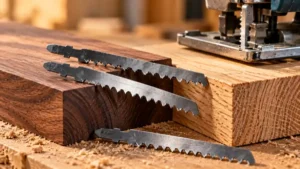
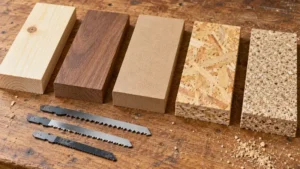
Choose a jigsaw blade for the board’s substrate, surface and thickness, then match the tooth shape to the cut. Solid softwood, hardwood, MDF, OSB and coated particleboard should not be treated as one interchangeable material. A clean visible edge may […]
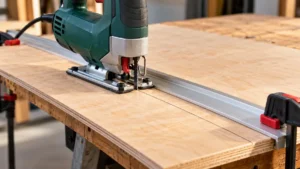
To cut straight with a jigsaw, use a sharp, rigid blade suited to the material, clamp the workpiece securely, and guide the saw against a straightedge or compatible parallel guide. Keep the baseplate flat, apply steady forward pressure, and let […]
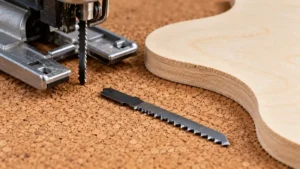
A jigsaw can turn a plywood template into a smooth arc, but the blade decides whether that arc feels controlled or becomes a jagged wrestling match. Curved cuts call for a different approach from long straight cuts. A narrow scrolling […]
Aluminum can look deceptively easy to cut. It is softer than steel, yet a poorly matched jigsaw blade can load up with chips, chatter across a sheet, or leave an edge rough enough to require substantial cleanup. That is why […]
Choose a metal-cutting jigsaw blade by the alloy, stock shape and thickness range listed for the exact blade. Aluminum, thin sheet steel and stainless steel are separate selection problems. Tooth pitch matters, but a universal “use this TPI for metal” […]